


Somewhere in America, there is a 20-something-year-old social media manager frantically explaining to their boss why the company needs to make a joke about eye bologna before noon.
This is reactive marketing in 2026. Sometimes you spend six months planning a campaign, and sometimes the internet hands you something completely batshit insane on a Tuesday morning, and you have about three hours to decide whether your brand is being called to serve or just STFU.
And if you don’t work in marketing, you may be wondering why you should care about any of this. If I were you, I would want to know what people like me are plotting to do with your brain and budget. Behind the curtain, we’re pulling tiny psychological strings designed to make you click, care, remember, want, and ultimately hand over your money. I have spent a significant portion of my career figuring out increasingly creative ways to mindfuck my way into your wallet on behalf of many brands you know, love, and subsidize.
But I’m also standing on the other side of the curtain right now, doing my best impression of Scrooge McDuck, except instead of hoarding my wealth in a vault big enough to swim laps in, I’m working with more of a kiddie pool situation and trying not to blow it all on cheap crap from Temu like I usually do. Life is expensive. I don’t have the luxury of throwing $40 at something just because a brand successfully poked the exact nostalgic part of my brain that remembers what I was doing when Enema of the State came out. Since I know how some of these strings are being pulled, I might as well show them to you too. There is a why behind almost everything being put in front of you, and somebody has already thought very carefully about why you might give them your money.
Which brings me back to deli meat slapped on your face.
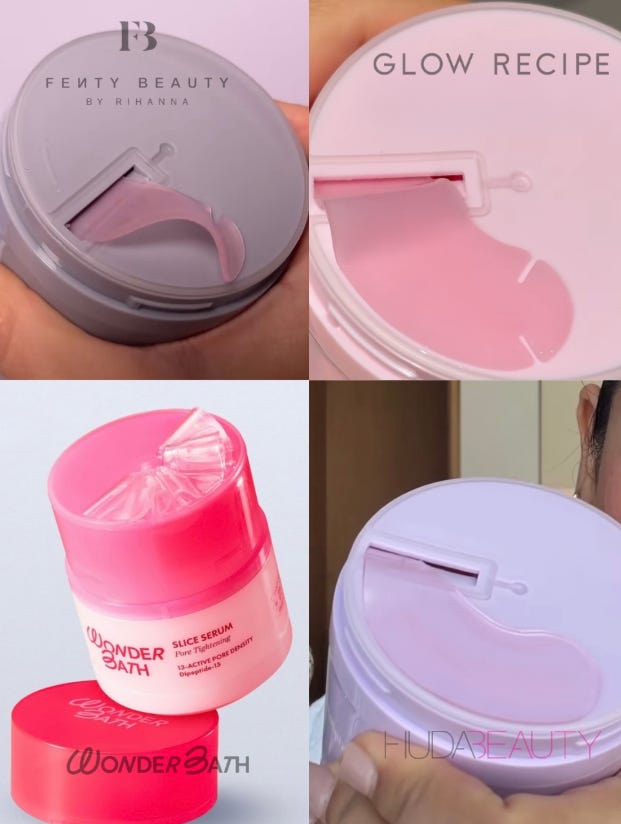
Several beauty brands recently unveiled versions of what appeared to be the exact same new under-eye product at almost exactly the same time. The product itself is already wonderfully ridiculous: a tube of hydrogel gets pushed through a little slicer so you can shave off a fresh under-eye patch whenever you need one. It’s basically a tiny deli counter for your eye bags. Give me two slices of cucumber Jell-O, thin, and throw in a pound of Boar’s Head while you’re back there.
Fenty Skin had one. Glow Recipe had one. Huda Beauty had one. Vitamasques had one. Beauty Internet immediately launched an investigation into who stole whose salami machine, and the answer appears to be that nobody did. The mechanism came from a supplier offering the technology to brands, and the format had already appeared in Korean beauty. Several companies essentially bought the same dress and then showed up at prom together, each having presumably spent months preparing a campaign about how nobody had ever seen a dress like this before.
Once consumers noticed, the brands could no longer control the original story. The conversation wasn’t “look at this innovative eye patch” anymore. It was “WHY DOES EVERYONE HAVE THE EYE PATCH?” And abracadabra! The smartest marketing move wasn’t sticking stubbornly to the launch plan. It was acknowledging the thing everybody else could plainly see and becoming part of the joke instead of the butt of one.
That is the part of reactive marketing I find fascinating. You don’t always get to choose the moment. Sometimes the internet drops one directly on your desk, and your job is to figure out whether your brand has a legitimate way into it before Legal finishes typing “I have some concerns.” Other times, you can see the jokes writing themselves.
Take the sudden corporate interest in emo and pop punk this fall. When We Were Young is taking 2026 off, leaving a conspicuous hole in October for a very specific population of elder millennials who normally spend an irresponsible amount of money flying to Las Vegas to recreate 2004 with worse knees and better credit limits. I cannot prove that marketers across America have a spreadsheet labeled UNSPENT EMO MONEY, but I would like to see their Google Sheets history.
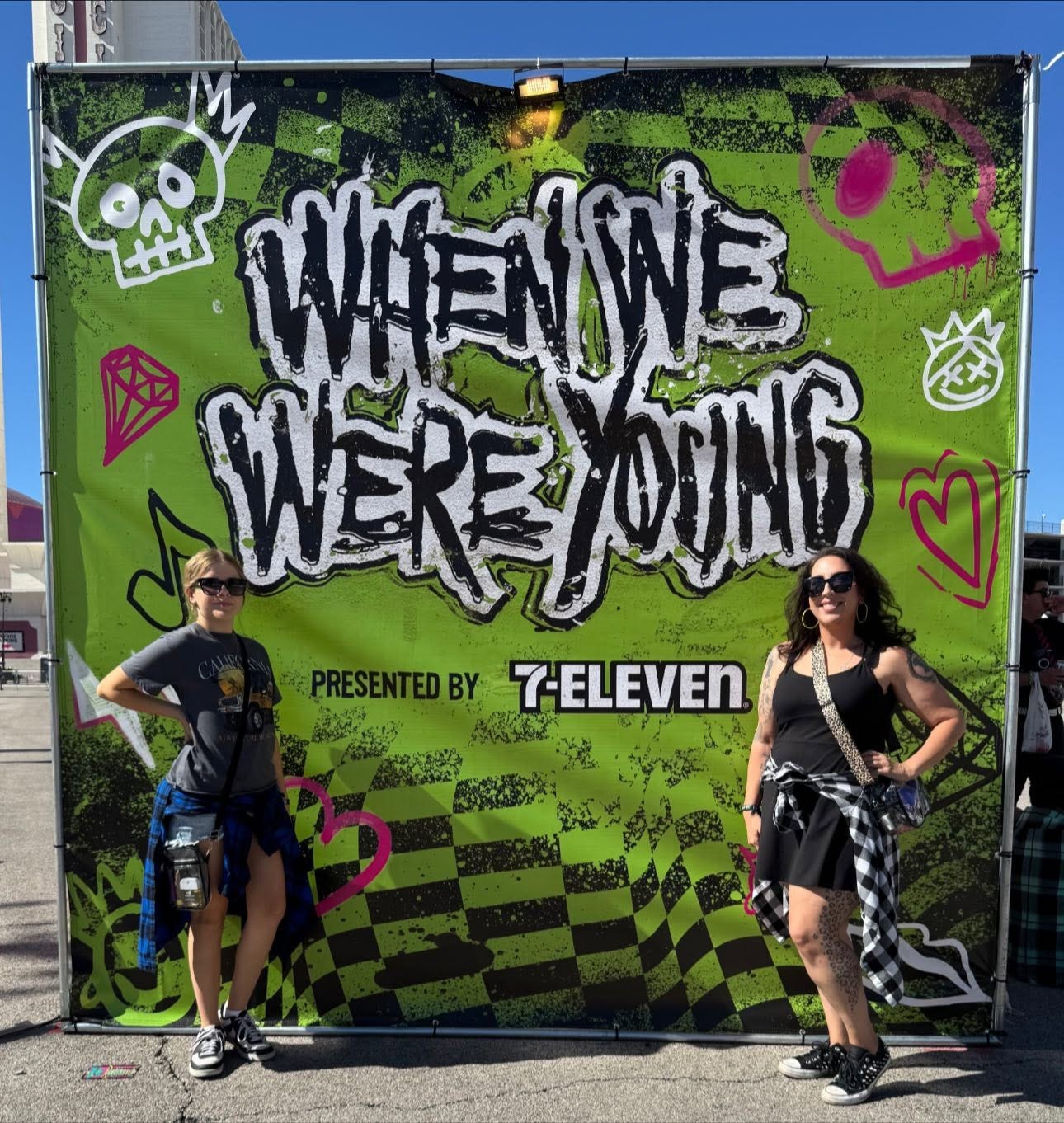
7-Eleven currently has a Blink-182 collaboration, and Wendy’s has released an actual six-song emo album. Not an emo-themed Instagram post. An actual album. From Wendy’s. At first I wondered what the hell Wendy, her pigtails, and square patties had to do with emo, but then I remembered how many emotionally catastrophic conversations my generation had in fast-food parking lots and realized they may actually have more authority on the subject than I do.
Here’s the string they’re pulling: your product doesn’t necessarily need an obvious relationship to the cultural moment. Your audience does. When a brand touches something you genuinely care about in a way that feels authentic, you feel seen. You think, Oh, they get me. That tiny bit of recognition builds affinity, and someday, standing in front of two functionally identical products, you may reach for the one that feels familiar without consciously knowing why.
Hello. It’s me again. Behind the curtain.

But we also know you can feel when we’re faking it. If a brand shoves some completely unrelated trending thing into your feed because everybody else is talking about it, the message isn’t “we get you.” It’s “we would like some of your attention, please.” Nobody wants to wonder why the company that sells them dishwasher detergent suddenly has opinions about Chappell Roan. The rule behind the curtain is supposed to be simple: if we’re going to interrupt your day, we should at least bring something you actually care about.
And this is one of those places where human judgment still matters. AI can spot the trend in seconds and generate 40 ways to participate. It can’t reliably tell you whether your brand belongs in the room. Reactive marketing requires understanding the difference between affectionate and pandering, delightfully unexpected and completely fucking random, and joining a conversation versus barging into one.
That’s also why virality isn’t really the prize, even though we marketers absolutely lose our minds over those numbers. Four million people can watch something, laugh, send it to a friend, and forget who posted it before they reach the next video. Congratulations, we entertained The Internet for nine seconds! “Will anyone give a single, solitary shit in six months?” should be a metric considered more often. What matters is whether, after the moment passes, you understand the brand better, feel more connected to it, or have another reason to care about what it does next.
When you see Wendy’s making an emo album or four beauty brands suddenly joking about their suspiciously identical deli slicers, enjoy it. Buy the fun thing if you actually want the fun thing. I’m certainly not here to take away anybody’s emotional-support Blink-182 Slurpee cup, and I’ll honestly pick up some of that crap myself if I can spare a few dubloons from my Scrooge McDuck kiddie pool. Just remember that none of this is accidental. Somewhere behind the curtain, somebody has already spent a lot of time thinking about what you care about, how to make you feel seen, and whether that feeling might eventually open your wallet.
They’ve done their thinking. Now you get to do yours.