


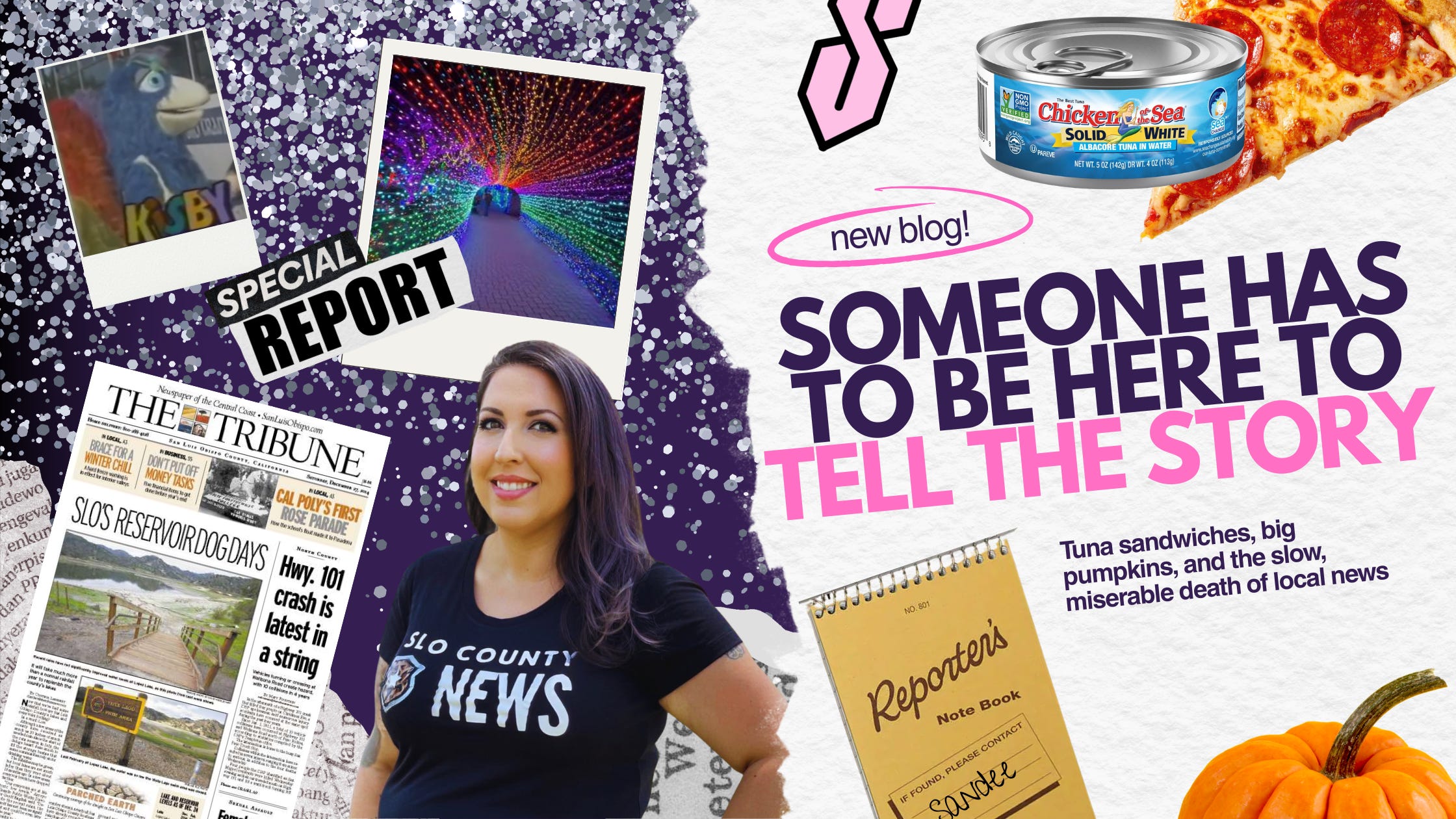
I wanted to work in newspapers so badly that I considered being allergic to them a manageable career obstacle. Handing out fresh copies of our high school paper gave me a headache, runny nose, sore throat, and sometimes a rash. Years later, at The Tribune, even the ink smell trailing behind the press guys into the break room could make me sneeze. My body had registered a formal objection to my childhood career aspirations, and I had decided we would be proceeding anyway.
That probably explains why I took McClatchy’s latest cuts at The Tribune considerably more personally than someone reading a business story about a newspaper they occasionally visit online. Five journalists were reportedly laid off: three reporters, a photographer and opinion editor Stephanie Finucane, with longtime North Coast reporter Kathe Tanner among those affected. Nationally, more than 90 unionized journalists and media workers across 17 McClatchy publications lost their jobs.
These were people’s livelihoods, but they were also people who had helped shape mine. I knew what it felt like to sit in that building, desperately wanting to become someone whose words belonged in its pages. Stephanie eventually helped me do that. To the company, she was a position to eliminate. To me, she was a big part of the paper that mattered.
Which is also why, shortly before all of this, I responded to a Tribune story about Scarlett Johansson’s feet by messaging editor Joe Tarica to ask, “What the fuck is this shit?”
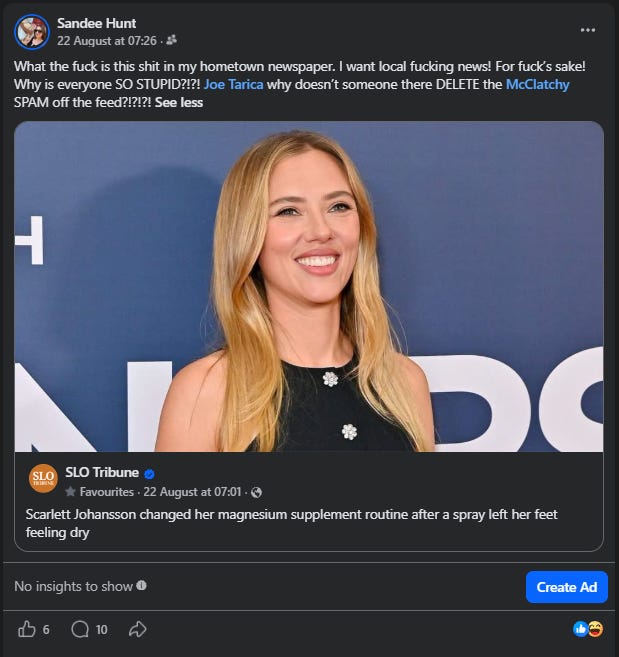
This was my very professional approach to expressing concern about local journalism. Joe had technically been my boss when I wrote a column for the paper, but in my defense, I’ve reached that feral perimenopausal era where the filters are gone, and he knows where my heart lies. I came to my hometown newspaper for information about my hometown, and I felt reasonably confident that TMZ or Goop had the resources to cover Scarlett Johansson’s itchy feet. Our column inches could be reserved for the Little League game down the street—or literally anything else remotely local that mattered.
My family moved to SLO County in 1987. My parents worked in law enforcement, and my dad was a Morro Bay police officer who regularly dealt with reporters from the Sun Bulletin, The Telegram-Tribune—as it was called then—and KSBY. Seeing his name in the paper was exciting. Seeing a friend, teacher or somebody’s parent felt like our little world had been recognized by the larger one.
My own contribution to the public record began with a tuna sandwich. Around 1990, KSBY showed up at Sunnyside Elementary School because restaurant pizza was being delivered to the cafeteria. This was a significant development for children whose hot lunches had previously come exclusively from the school kitchen. I was in first grade, but I had watched enough television to understand that “Pizza is good” would not secure me airtime. They needed a story, and I had a lunch that could be repurposed into adversity.
There was nothing wrong with my tuna sandwich. I brought one practically every day, as reliably as I showed up in the pink glitter cowgirl boots with fringe that everyone’s mom bought them from Mervyn’s that year. Despite my Italian lineage, I was going through a childhood food era in which frozen White Castle cheeseburgers and Chicken of the Sea were acceptable and pizza was a hard “hell no.” My Little Mermaid–themed birthday party had been at Round Table that year, and I had declined to participate in the restaurant’s primary offering.
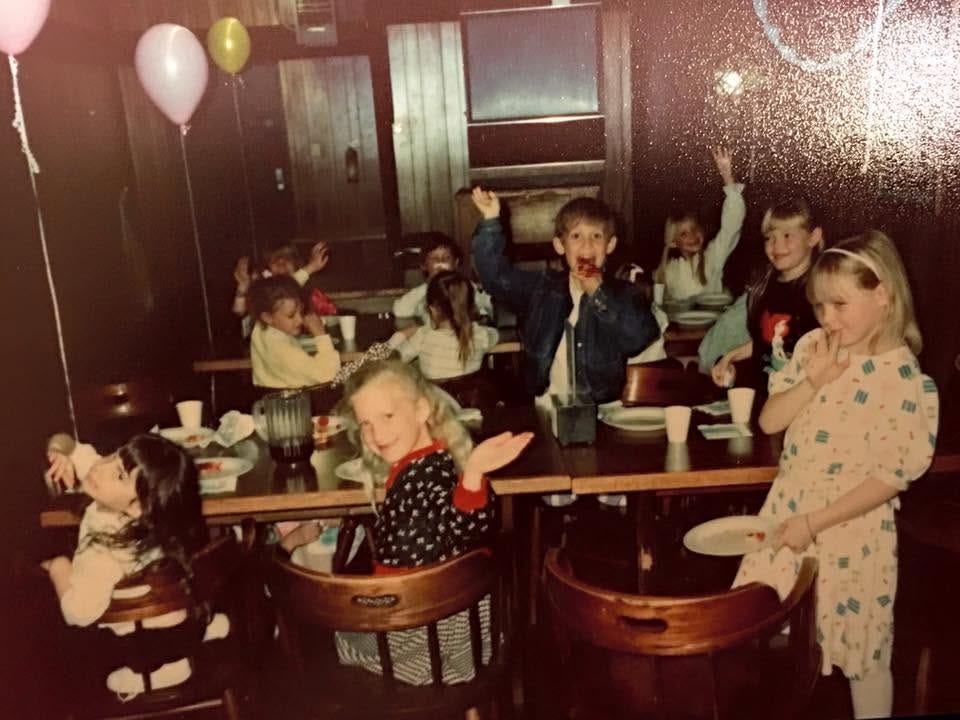
None of this served my media strategy, so I approached the camera crew and lamented having tuna while everyone else got pizza. I rolled my eyes and delivered my assessment: “Ugh, ’cause tuna is just so down the drain for me.” Of course they used it. I had provided conflict, emotional stakes and a quotable, adorable victim in pink glitter with aggressively blunt bangs, all before afternoon recess.
My dad recorded the broadcast and thought it was hilarious, especially once he understood that I had auditioned for the evening news by disparaging a sandwich I loved. He took the tape to work and wanted to send it to America’s Funniest Home Videos. Even then, I understood that he was overestimating the national appetite for this material. This was sassy-little-kid funny, not David After Dentist funny. Bob Saget wouldn’t give a shit.
Dad later took me to watch the evening news being produced at KSBY, where I brought my Lisa Frank sticker book to collect autographs from people like Mitch Massey and Tony Cipolla. One night’s closing story featured an enormous pumpkin, exactly the kind of breaking agricultural development you’d expect in our slice of Mayberry. As the credits rolled, Mitch gestured toward me just outside the shot and said, “That’s a big pumpkin, huh, Sandee?” Technically, I was not on the news, but I was sufficiently adjacent to consider the evening a triumph.
Local broadcasters occupied a strange category somewhere between journalist and hometown celebrity. Sharon Graves, with her big hair and elegant delivery, might as well have been Cindy Crawford. Rick Martel was our Ron Burgundy before Anchorman existed. The cross-country team at my high school even performed skits that imagined an exaggerated Rick Martel in a variety of bizarre scenarios, such as not having enough ketchup packets to enjoy his Burger King french fries. You know you’re a legend when the kids create lore from your mythology. The Sun Bulletin brought that same familiarity to the page. I read about my friends, their parents’ businesses and the waterfront hooligans and belligerent beachgoers from Bakersfield populating Neil Farrell’s police blotter.
Before we opened an app to see what everyone was doing, we turned pages and found familiar faces. Somebody had decided that this person, this accomplishment or this very large pumpkin deserved space in the record. That mattered to me before I had the vocabulary to explain why.
My sister and I made newspapers, magazines, broadcasts and commercials at home. Taking journalism as a freshman at Morro Bay High School meant discovering that our hobby came with a classroom and a teacher. Julie Larsen taught yearbook, newspaper and French, and could see through bullshit while also seeing straight into the soul of a child. She took my writing seriously and gave me guidance when I felt like not a single, solitary adult in my life gave a shit about me.
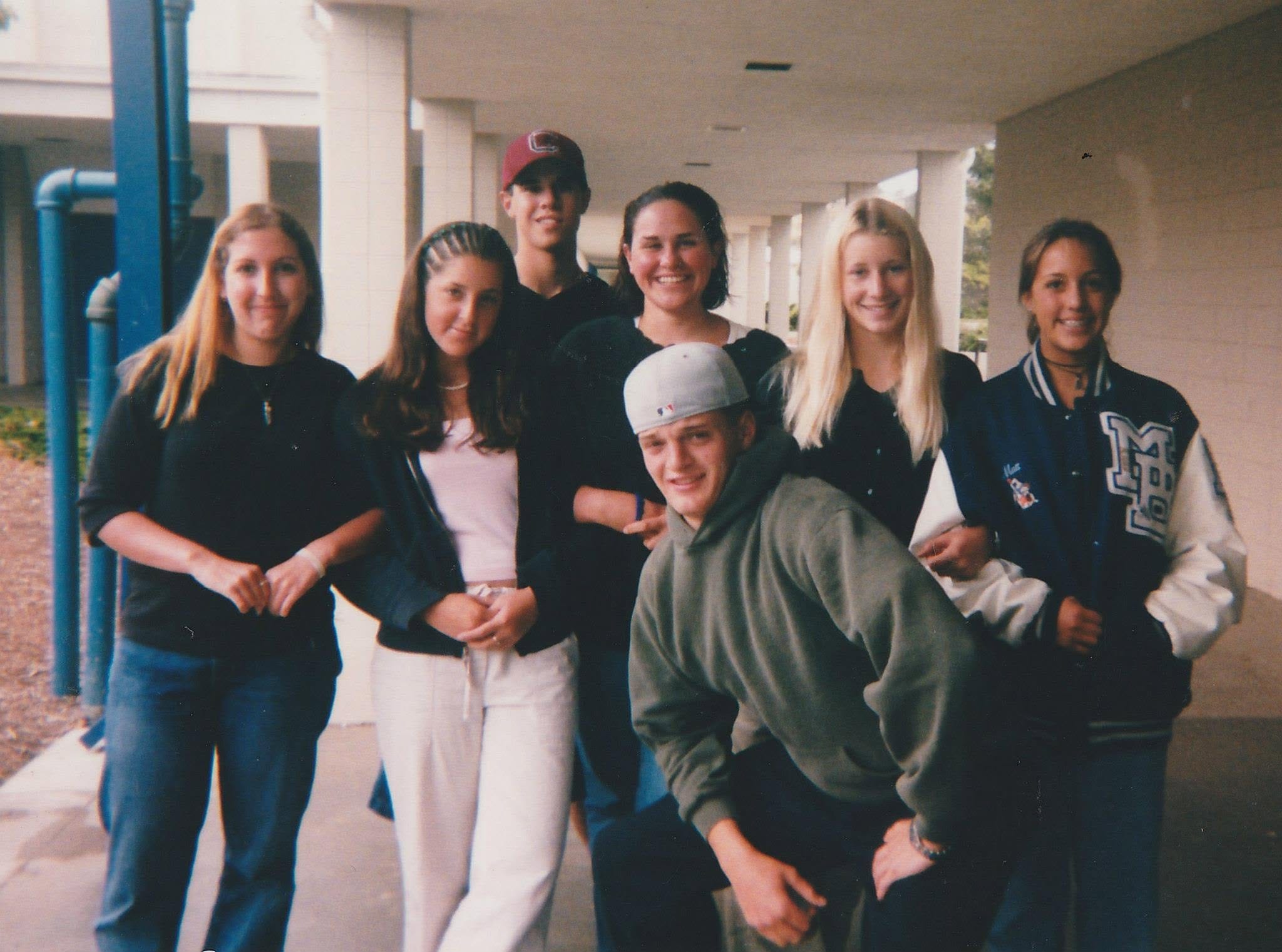
Most of my spare time was divided between cheerleading and Room 408, where we made The Spyglass on old Macs. We sold ads, designed pages, ran the pieces through a wax machine and pasted everything into place before driving it to the newspaper’s presses. People were excited when we carried the finished papers into classrooms. I loved watching them read our work, even as my sinuses questioned whether fashion merchandising might involve fewer histamine reactions.
I still have those papers and spiral-bound reporter’s notebooks, along with clippings from the Sun Bulletin and The Tribune featuring me and my friends. They let me revisit a version of our lives that somebody took the time to notice.
I wanted to become a journalist, but I did not go straight to college. At 20, I took a circulation job at The Tribune because it got me inside. Sam J Lin was there as a copy editor. We had been editors together at The Spyglass, and now we worked in the building that printed it. His route had included a full-ride journalism scholarship to Harvard. Mine involved fielding phone calls from extremely angry people on Sunset Terrace who were missing the Sunday comic section. I’m not jealous all these years later. Really, I’m not.
Eventually, I moved into advertising, where I could still find ways to care too much about things like wedding announcements and how aggressively we could abbreviate “Datsun” while still allowing somebody to sell the car. More importantly, the move placed me near Bill Morem and Stephanie Finucane as they worked on the editorial pages.
The late GOAT Bill Morem gives a tour of the old SLO Tribune newsroom on South Higuera Street, and this was after it had been gutted to half its size over 15 years ago.
Anyone familiar with those two will understand the education that proximity offered. I watched them consider what somebody was saying, what they left out and whether the argument survived scrutiny. Intelligence and humor could occupy the same space; you could love a community and still recognize that some of its people were being completely ridiculous. There was room for a voice and a responsibility to have something behind it.
These were formative years in less academic ways too. I celebrated my 21st birthday with enough enthusiasm to throw up in the bathroom at work the next day and stayed through planning my wedding. Tribune people were woven through the wedding itself; the woman who caught my bouquet worked with me in classifieds. These were the people around me while I figured out adulthood. The newspaper documented our community while the people inside it became part of my own history.
McClatchy acquired Knight Ridder in 2006, and in the upheaval that followed, I eventually left for marketing, PR, e-commerce and digital content. I was still finding stories and figuring out how to make people care.
In 2019, those skills converged around a story I had followed since childhood. Kristin Smart disappeared in 1996, when I was 12. I heard the case discussed around our dinner table, then read the paper and tried to reconcile what I heard with what was reported. When Chris Lambert’s Your Own Backyard podcast brought renewed attention, I helped with social media and public-facing communication, applying what I knew about growing an audience while treating Kristin’s story with the care it deserved.
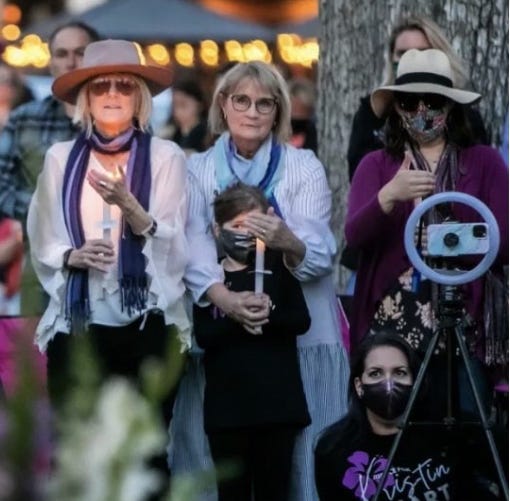
Kristin’s mother, Denise, often used the analogy that we were preparing to land the plane. After years of circling the runway, everyone needed to buckle up and be ready. My role was closer to flight attendant: helping organize communications, make connections and help the attention serve a purpose while Chris continued reporting and law enforcement pursued the investigation from the cockpit. A story from my childhood had followed me into adulthood, where everything I had learned gave me a small way to help.
There was another local reporter who shaped how I thought about what community news could be, although he didn’t work from a traditional newsroom. Matthew Frank was better known around here as SLOStringer. If something was on fire, upside down, blocking Highway 101 or otherwise requiring several vehicles with flashing lights, there was a decent chance Matt was already there.
He understood something deceptively simple about local news: somebody has to show up. You can repeat a press release from anywhere. Matt went to the scene. He photographed it, told people what was happening and built an audience because people knew that when something weird, scary or important was unfolding somewhere in SLO County, Stringer was probably on his way.
In March 2017, Matt died in a crash during a rainstorm while driving to cover a fire. He was 30. The loss hit this community hard enough that a stretch of Highway 101 now bears his name. But the hole he left wasn’t only emotional. We had lost someone who had made it his job—largely on his own—to be there.
That absence became part of the inspiration for what eventually became SLO County News. The model wasn’t complicated: when something was happening here, find out what was actually happening and tell people without turning the comment section into a municipal psych ward.
When COVID arrived, we needed timely local information without clickbait, comment wars or paywalls. Through SLO County News, now serving more than 40,000 members, we tried to provide that. Asking people not to comment unless they had something thoughtful or factual to add was surprisingly controversial. The internet has trained us to treat information as an invitation to perform whatever emotion it causes. We wanted people to find what they needed without “gunshots or fireworks?” appearing in 50 different ways. If you want to blame Obama for the potholes on South Street, knock yourself out. The internet has plenty of real estate for that. We weren’t donating ours.
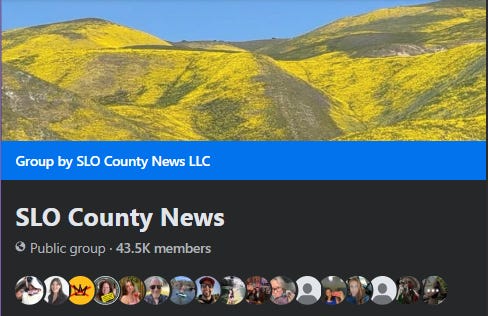
After the June 2020 search for an active shooter in Paso Robles, several residents told me that refreshing our group for updates helped them feel safer. They could find information without a paywall or digging through unrelated posts. Knowing we helped somebody sitting frightened in their house meant more to me than any engagement statistic.
But doing that work also taught me its limits. I could organize information, verify what I could, moderate bullshit and help reliable reporting reach thousands of people. I could not spend my Tuesday sitting through a government meeting nobody cared about yet, spend months fighting for public records or build years of expertise on a beat while an editor paid me to keep asking questions after everybody else got bored. Community information can fill gaps. It cannot replace the infrastructure required to report what the community does not know yet.
The Tribune approached me in 2020 about becoming a columnist because of my community work. After the school newspapers, circulation and classifieds, I finally got to do the thing I wanted. Stephanie Finucane edited my pieces—the woman I had learned from while sitting in advertising was now helping me write for the paper.
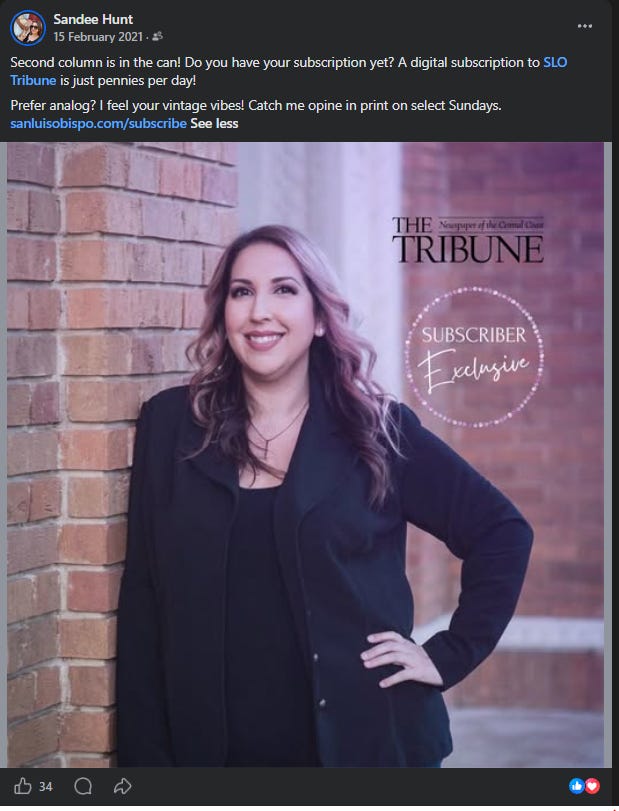
I wish I had met the opportunity with confidence. I was timid and struggling with imposter syndrome, and even the overwhelmingly positive response was difficult to absorb. Someone would approach me in the grocery store to praise my Sunday column, and I wanted to leap into a bin of grapefruit and hide for eternity. As a child, I thought Sharon Graves was Cindy Crawford. As an adult, being recognized near the vegetables exceeded my nervous system’s specifications. Still, I wrote about Cal Poly’s handling of the Kristin Smart case, ethnic studies, school reopenings and our obsession with arguing about flags. I may wish I had been braver, but I became part of the conversation I had followed my whole life.
Bill died in 2015, and I cannot tell him now what that education meant. Stephanie is still here. Her judgment and talent did not evaporate when McClatchy eliminated her job. We still have people capable of doing the work we need, and the company has decided to stop paying them to do it. You should not have to know anyone in the newsroom to understand what their absence costs you. Most readers never sat beside Kathe Tanner. They depended on her to sit through things they couldn’t.
Kathe had been writing about the North Coast since 1981. In a 2021 reflection, she remembered a Cambrian staff with editors, reporters, a photographer, interns, stringers, advertising and circulation employees. By then, she covered Big Sur to Cayucos herself: “Now it’s just me.”
Consider what this means for something like the Cambria Christmas Market. Without Kathe at the helm, a minimum-wage Fresno Bee intern will use AI to assemble a cheerful article without ever standing beneath a single twinkling light or braving the shitshow parking situation. Kathe covered both the attraction and, with Stephanie Zappelli, the dispute over its 15-year permit: business benefits alongside residents’ concerns about traffic, noise, lights and the Monterey pine forest. A vacation destination is somebody’s neighborhood. Covering it requires considerably more work than regurgitating the bullet points from a glossy tourism brochure. You have to get your hands dirty, and maybe have a cup of cocoa.
You do not have to be born here to do this well. Newer journalists have brought fresh eyes and a willingness to question people this county has gotten far too comfortable with. But they need time to learn, experienced colleagues and enough support to stay.
Matt Fountain’s work shows what that investment can produce. He obtained and published surveillance footage challenging officials’ account of Andrew Holland’s death after nearly two days in a restraint chair at the County Jail. McClatchy itself gave that reporting a President’s Award. Apparently, it once understood the value of making powerful people uncomfortable.

Matt examined congressional candidate Justin Fareed’s ranching and oil ties in work recognized by the California Journalism Awards. He covered the disqualification of the District Attorney’s Office from Tianna Arata’s case and examined more than 1,600 pages of emails released after a Tribune records request. He kept asking questions about Tommy Jodry’s death, documenting the coroner’s change from suicide to undetermined and uncovering records of a prior sex-offense conviction involving David Allen Knight, the older man who had been drinking with Jodry. Knight denied causing his death, and police cleared him of wrongdoing, but would we know any of this if Matt hadn’t kept digging through courthouse archives and demanding records?
That is a lot of accountability attached to one byline. And it is exactly the kind of work my experience with SLO County News taught me I could not reproduce with a Facebook group. It requires a paid reporter with time to investigate, an editor to scrutinize the findings and an organization prepared to stand behind the work.
The opinion page gave us another kind of accountability: a place to argue about this county and talk back. If you have pounded out a keyboard manifesto under a Tribune editorial, consider what happens when the people producing them disappear. You were reading, reacting and thinking about something here. You gave a shit. There is value in having an argument substantial enough to engage with.
I am writing again and enrolled at Cuesta College, taking JOUR 201—the class I never got around to taking at 20, when I went to work in The Tribune’s circulation department instead. Apparently, I needed a 22-year field trip before returning to the syllabus. I have more experience, plenty left to learn and a growing willingness to take this first love seriously enough to see what I can still do with it. Not that there’s a job locally for me at the end or anything. That’s true love, I suppose. Perhaps I’ll carry the torch for Mitch Massey and blog about giant pumpkins from this Substack.
Which brings us back, regrettably, to Scarlett Johansson’s feet.
I brought that story to class for a discussion about what makes something newsworthy. The garbage McClatchy splashed across my hometown newspaper had been upcycled into educational content at Cuesta College. See? There really is no end to what the journalistic minds of San Luis Obispo County can do with the material they are given. Imagine what they could do with adequate staffing and funding.
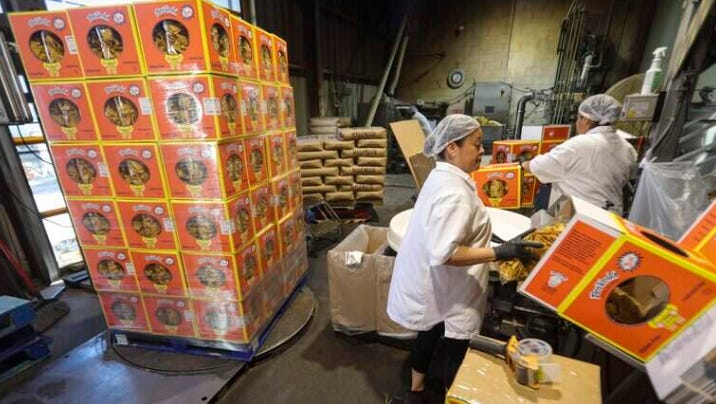
That means actual human beings who live here, show up here and experience the consequences of what happens here. People who sit through the meeting, walk beneath the Christmas lights, ask the uncomfortable question and then run into the person they wrote about in the produce aisle. Those relationships require judgment, boundaries and the willingness to publish something that might make your next Farmer’s Market trip awkward. When you live where you report, you have to stand behind your work long after you hit publish.
Some dork in San Jose assembling a story from AI summaries and TikTok videos can put “San Luis Obispo” in a headline. Giving us a newspaper that knows where it is takes people willing to be here—and a company willing to pay them to stay.
We deserve to read about our community through the eyes of people who will still have to look us in ours.